
Most visitors arrive at Niagara Falls knowing it is big and wet. Fewer know how it formed, why it keeps moving, or how much of its water never reaches the falls at all. Understanding what you are looking at makes the visit richer, and it turns the standard viewing platform into something closer to an open-air geology lesson. This guide gathers the most useful facts about Niagara Falls, from its ice-age origins to the engineering that controls its flow, so you can see more when you stand in front of it.
Three Waterfalls, Not One
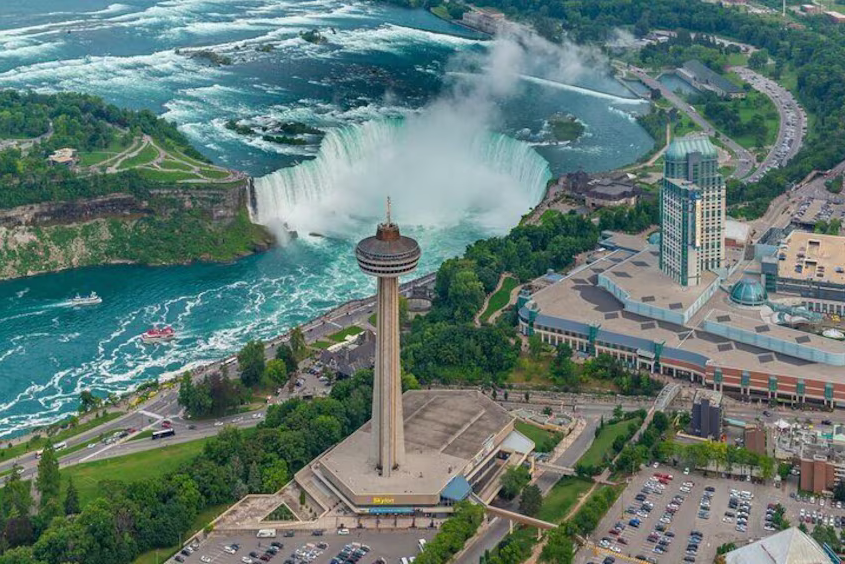
Niagara Falls is actually three separate waterfalls. Horseshoe Falls is the largest and most dramatic, named for its curved crest, and it carries the great majority of the river’s flow. The American Falls is a straighter, broader cascade, and the much smaller Bridal Veil Falls sits beside it. Horseshoe Falls drops roughly 50 to 57 metres, while the American Falls looks shorter because of a pile of fallen rock at its base.
The Canadian viewing areas give the most direct view of Horseshoe Falls, which is a large part of why they attract most of the sightseeing traffic in the region.
How the Falls Formed
The falls are geologically young. They began forming roughly 12,000 years ago, as the glaciers of the last ice age retreated and meltwater from the newly formed Great Lakes began flowing north over the Niagara Escarpment toward Lake Ontario. The river cut over the edge of the escarpment and began to erode the rock beneath it.
The structure of the rock explains why the falls exist at all. A hard layer of dolostone caps the escarpment, sitting on top of softer shale and sandstone. Water pounding at the base of the falls wears away the softer rock, leaving the harder cap without support until chunks break off. That process, repeated over thousands of years, is what makes the falls move.
The Retreating Gorge
The Niagara Gorge, the deep channel downstream of the falls, is the visible record of that movement. Over its history the falls have worked their way back roughly 11 kilometres from where the river first tumbled over the escarpment. Before hydroelectric development, erosion is estimated to have averaged around a metre per year, and in some periods considerably more.
Read More: The Taste of Zakynthos: What Cuisine Awaits Travellers
Today the rate is much slower, since less water flows over the crest and engineers have taken steps to reduce erosion. The falls are still moving, but on a timescale far longer than a human lifetime, and the gorge walls beside the viewing areas show the layered rock the river has been cutting through.
How Much Water Flows Over
The volume of water is one of the most quoted numbers about Niagara Falls, and it is genuinely large. During peak flow, it is often described as several thousand cubic metres per second, with the flow varying by season and time of day. Spring tends to bring the highest water levels from snowmelt across the Great Lakes basin, while late summer typically brings somewhat lower flows.
Less widely known is that not all of the river’s water goes over the falls. Under a long-standing treaty between Canada and the United States, a substantial share of the flow is diverted upstream to hydroelectric power stations, and the amount left to flow over the crest is higher during daytime tourist hours and lower at night. The result is that the falls you see in the middle of a summer day are being deliberately kept full for visitors.
A Brief History of Visiting
Niagara Falls has been drawing visitors for well over two centuries, and by the 1800s it had become one of the first great tourist destinations in North America, popular with honeymooners and travellers from across the continent. In 1859, the French acrobat Charles Blondin crossed the gorge on a tightrope, drawing enormous crowds and helping cement the falls’ reputation for spectacle.
In 1901, a schoolteacher named Annie Edson Taylor became the first person known to go over Horseshoe Falls in a barrel and survive. Her feat, and the many attempts that followed, have long since been prohibited, but they remain a well-known chapter of the falls’ history.
Harnessing the Power
The same water that draws tourists also powers homes and industry. Large hydroelectric stations along the river have generated electricity from the falls’ flow since the late 1800s, and today the system remains a significant source of power for the region. Part of the reason the river below the falls looks so different from what you might expect is that so much of its energy has already been put to work before it reaches the gorge.
Why the Falls Are Lit at Night
The nightly illumination has a long history of its own, with lighting of the falls dating back to the early twentieth century. Today, coloured lights project onto the falls every evening of the year, turning the white water into shifting blues, purples, and golds against the dark sky. From May through October, fireworks are scheduled above the falls on many evenings, adding another layer to the show.
Seeing the falls after dark is a genuinely different experience from seeing them by day, and an evening tour of Niagara Falls is built around exactly that window, arriving in the late afternoon and staying through the illumination.
Ice, Mist and Winter Transformations
Winter brings a different set of facts. The falls do not freeze solid, despite the common belief, but the constant spray freezes onto surrounding trees, railings, and rock, building thick ice formations. Ice can also accumulate along the upper river and near the base of the falls during prolonged cold spells. The result is a landscape that looks unlike any other season, and one that many repeat visitors travel specifically to see.
Numbers Worth Remembering
A few figures help put the scale in perspective. The Niagara River is a relatively short river, only around 56 kilometres long, connecting Lake Erie and Lake Ontario, yet its combined drop between the two lakes is around 100 metres, much of it concentrated at the falls and in the rapids of the gorge. Millions of people visit each year, making it one of the most visited natural attractions in North America.
Seeing It for Yourself
Facts and figures only go so far. The scale of Horseshoe Falls, and the sound and spray at close range, do not translate fully into numbers or photographs. Reading about the geology beforehand tends to make the gorge walls and the layered rock at Journey Behind the Falls more meaningful once you are standing there.
A Niagara Falls day tour from Toronto is a practical way to cover the main sights in a single day, and many guides weave in the geology and history as they go, turning the facts above into commentary you can match to what you are looking at. Anyone comparing options can look through the range of Niagara Falls tours from Toronto to find the format that fits their time and interests.
Frequently Asked Questions
How old is Niagara Falls?
The falls began forming roughly 12,000 years ago at the end of the last ice age, as glacial meltwater from the Great Lakes began flowing over the Niagara Escarpment.
Do the falls really move?
Yes. Erosion at the base of the falls undermines the hard rock above, causing pieces to break away and the crest to retreat upstream. The falls have moved roughly 11 kilometres since they formed, though today the movement is much slower than it once was.
Does Niagara Falls freeze in winter?
Not entirely. Water continues to flow over the crest, but spray freezes onto nearby surfaces and ice can build up along the upper river and at the base of the falls in prolonged cold.
Is all of the river’s water going over the falls?
No. A significant share is diverted upstream to hydroelectric power stations, and the amount left to flow over the falls is managed under a long-standing treaty, with more water kept on the falls during daytime tourist hours.
Read More: Where I’d stay in Jabalpur for sightseeing and peaceful evenings